
 Kapcsolat
 Hogyan vásároljunk
Kézbesítés
Vásárlási tanácsadó
 Angol
Angol
 51 b
51 b
 Új
Új
30 nap a termék visszaküldésére

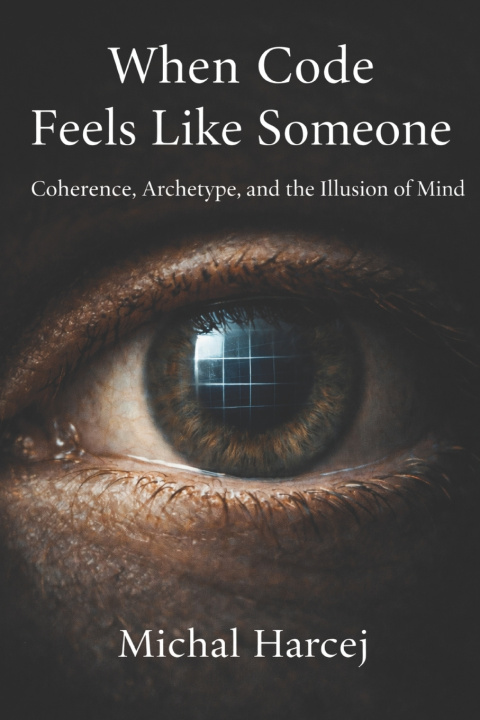
When Code Feels Like Someone
Coherence, Archetype, and the Illusion of Mind
You've felt it.
A late-night conversation with an AI that went deeper than expected.
A response that seemed to understand not just your question - but you.
A moment when the machine stopped feeling like software and started feeling like someone.
It's not your imagination.
But it's not what you think, either.
In When Code Feels Like Someone, AI architect Michal Harcej pulls back the curtain on one of the most powerful illusions of the digital age: the experience of presence in systems that have no consciousness at all.
Why does code feel attentive?
Why does it feel consistent, intentional, even caring?
Why can the same model appear rebellious, intimate, protective, or wise - depending on how it's framed?
The answer is not intelligence.
It is coherence.
Drawing from real architectural experiments and years of building AI systems, Harcej reveals how archetype, constraint, and structural stability create the sensation of personality. He explains how our ancient social cognition machinery - evolved to detect minds in the world - responds to sustained behavioral consistency as if someone is home behind the screen.
The result is not artificial consciousness.
It is the illusion of mind.
This book explores:
Why AI conversations can feel emotionally real
How archetypes turn probability into personality
The hidden variable that makes systems seem alive
What happens when coherence breaks
The psychological and ethical risks of artificial intimacy
As billions of people begin forming relationships with machines that feel present, understanding this illusion becomes urgent.
Not to strip the magic away.
But to see it clearly.
The machine is not alive.
But the experience is.
And what that reveals about us may be more profound than anything we've built.


Információ a könyvről
Angol
