
 Kapcsolat
 Hogyan vásároljunk
Kézbesítés
Vásárlási tanácsadó
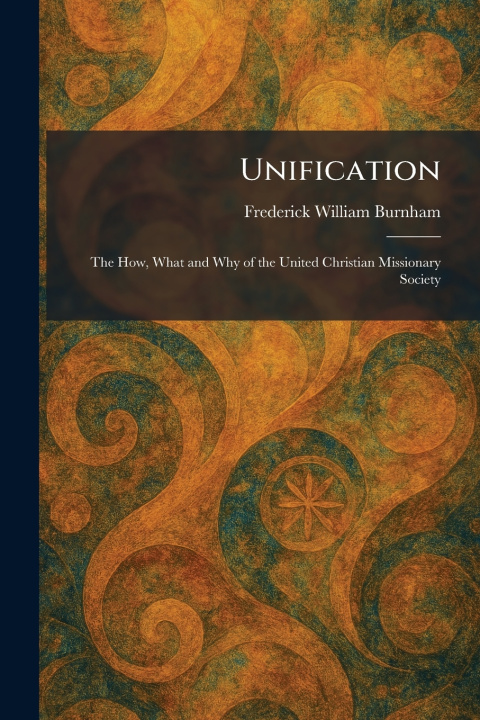
Unification
The How, What and Why of the United Christian Missionary Society
 Angol
Angol
 44 b
44 b
30 nap a termék visszaküldésére

"Unification: The How, What and Why of the United Christian Missionary Society" provides a comprehensive examination of the landmark institutional consolidation that transformed the missionary efforts of the Christian Church (Disciples of Christ) in the early 20th century. Written by Frederick William Burnham, a pivotal figure in the movement, this work serves as both a historical record and a strategic manifesto for the unification of diverse religious boards into a single, cohesive entity.
The book delves into the spiritual and practical motivations behind merging multiple missionary associations, exploring the "why" of collective action in spreading the Christian faith. It outlines the structural framework of the United Christian Missionary Society, detailing the "what" of its administrative functions and the "how" of its operational execution. Burnham captures a significant era of Protestant ecumenism and organizational modernization, reflecting the broader American religious landscape of the 1920s.
This volume is an essential resource for historians of the Disciples of Christ, scholars of missiology, and those interested in the evolution of institutional religious structures. It offers unique insights into the challenges and triumphs of coordinating global mission work, education, and benevolent services under one unified banner, preserving the vision that shaped a generation of religious leadership.
This work has been selected by scholars as being culturally important, and is part of the knowledge base of civilization as we know it. This work was reproduced from the original artifact, and remains as true to the original work as possible. Therefore, you may see the original copyright references, library stamps (as most of these works have been housed in our most important libraries around the world), and other notations in the work.
This work is in the public domain in the United States of America, and possibly other nations. Within the United States, you may freely copy and distribute this work, as no entity (individual or corporate) has a copyright on the body of the work.
As a reproduction of a historical artifact, this work may contain missing or blurred pages, poor pictures, errant marks, etc. Scholars believe, and we concur, that this work is important enough to be preserved, reproduced, and made generally available to the public. We appreciate your support of the preservation process, and thank you for being an important part of keeping this knowledge alive and relevant.


Információ a könyvről
Angol
