
 Kapcsolat
 Hogyan vásároljunk
Kézbesítés
Vásárlási tanácsadó
 Német
Német
 38 b
38 b
30 nap a termék visszaküldésére

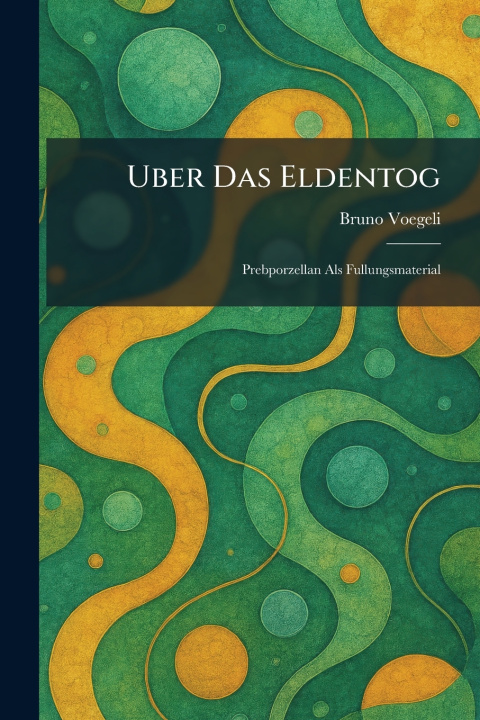
"Uber Das Eldentog=prebporzellan Als Fullungsmaterial" ist eine detaillierte wissenschaftliche Untersuchung von Bruno Voegeli, die sich mit der Anwendung und den Eigenschaften von Porzellan in der restaurativen Zahnheilkunde befasst. Das Werk analysiert die Eignung spezieller Porzellanmassen als Füllungsmaterial und stellt einen bedeutenden Beitrag zur zahnärztlichen Werkstoffkunde des frühen 20. Jahrhunderts dar.
Der Autor untersucht systematisch die technischen Herausforderungen der Verarbeitung sowie die klinischen Vorteile, die Porzellan gegenüber anderen Materialien wie Amalgam oder Gold in Bezug auf Ãsthetik und biologische Verträglichkeit bietet. Voegeli beleuchtet dabei sowohl die chemische Beständigkeit als auch die mechanische Belastbarkeit des Materials im dentalen Kontext.
Dieses Fachbuch dient als wertvolles historisches Dokument für die Entwicklung der modernen Zahnmedizin. Es richtet sich an Medizinhistoriker, Zahnärzte und Materialwissenschaftler, die ein Interesse an der Evolution ästhetischer Rekonstruktionen und der frühen Erprobung metallfreier Füllungssysteme haben. Die Arbeit verdeutlicht das Bestreben der damaligen Forschung, langlebige und natürliche Lösungen für die Zahnerhaltung zu finden.
This work has been selected by scholars as being culturally important, and is part of the knowledge base of civilization as we know it. This work was reproduced from the original artifact, and remains as true to the original work as possible. Therefore, you may see the original copyright references, library stamps (as most of these works have been housed in our most important libraries around the world), and other notations in the work.
This work is in the public domain in the United States of America, and possibly other nations. Within the United States, you may freely copy and distribute this work, as no entity (individual or corporate) has a copyright on the body of the work.
As a reproduction of a historical artifact, this work may contain missing or blurred pages, poor pictures, errant marks, etc. Scholars believe, and we concur, that this work is important enough to be preserved, reproduced, and made generally available to the public. We appreciate your support of the preservation process, and thank you for being an important part of keeping this knowledge alive and relevant.


Információ a könyvről
Német
