
 Kapcsolat
 Hogyan vásároljunk
Kézbesítés
Vásárlási tanácsadó
 Angol
Angol
 77 b
77 b
30 nap a termék visszaküldésére

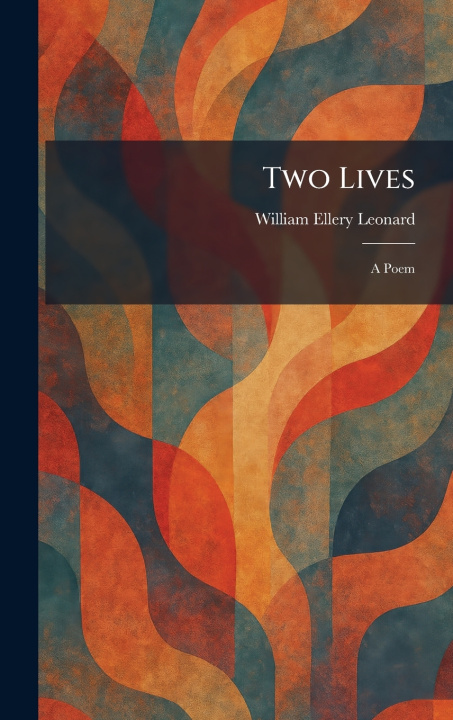
"Two Lives: A Poem" is a profound and deeply personal narrative work by William Ellery Leonard. Written as an extensive sequence of sonnets, this masterpiece of 20th-century American poetry explores the complexities of love, the devastation of mental illness, and the weight of personal tragedy. The work provides an intimate look into the arc of a marriage, tracing its path from initial hope and intellectual companionship to a harrowing conclusion defined by psychological suffering and loss.
Renowned for its raw emotional honesty and formal precision, Leonard's work functions as both a tragic memoir and a universal exploration of the human condition. The poem captures the intellectual and social anxieties of its era while delving into the timeless themes of grief and guilt. By employing the sonnet form to convey a sustained and tragic narrative, "Two Lives: A Poem" stands as a significant milestone in the evolution of modern poetry. It remains an essential read for those interested in narrative verse and the powerful intersection of personal experience and literary art.
This work has been selected by scholars as being culturally important, and is part of the knowledge base of civilization as we know it. This work was reproduced from the original artifact, and remains as true to the original work as possible. Therefore, you may see the original copyright references, library stamps (as most of these works have been housed in our most important libraries around the world), and other notations in the work.
This work is in the public domain in the United States of America, and possibly other nations. Within the United States, you may freely copy and distribute this work, as no entity (individual or corporate) has a copyright on the body of the work.
As a reproduction of a historical artifact, this work may contain missing or blurred pages, poor pictures, errant marks, etc. Scholars believe, and we concur, that this work is important enough to be preserved, reproduced, and made generally available to the public. We appreciate your support of the preservation process, and thank you for being an important part of keeping this knowledge alive and relevant.


Információ a könyvről
Angol
Kategória
