
 Kapcsolat
 Hogyan vásároljunk
Kézbesítés
Vásárlási tanácsadó
 Angol
Angol
 62 b
62 b
 Új
Új
Akár 30 napos visszaküldési lehetőség

There is an enemy that no army can defeat, no wealth can bribe, and no charisma can seduce. It is patient beyond measure. It consumes empires the way a river consumes stone - not in a single catastrophic blow, but through the relentless, invisible accumulation of moments. That enemy is time.
Power, wealth, and fame share a fundamental fragility: they are attached to something mortal. The moment the human body that contains them fails, they begin their decay. A reputation lasts perhaps a generation beyond the grave. A fortune lasts three, perhaps four, before it is diluted by inheritance and dissipated by heirs who did not earn it. Even the most celebrated names in history are, for the vast majority of living human beings, simply letters on a page - known, perhaps, but not felt, not operative, not shaping the actual decisions of daily life.
And yet.
There are certain figures whose influence does not decay. Whose frameworks for understanding reality continue to organize the minds of people who have never heard their names. Whose aesthetic preferences still determine what we consider beautiful. Whose legal concepts still define what we consider property. Whose philosophical categories still structure how we argue about justice, freedom, and the proper organization of human society.
These people did not merely succeed. They performed an operation of a different order entirely. They embedded their minds into the fabric of collective reality so deeply that separating their thought from "reality itself" became impossible. They became not actors in history, but the stage upon which history performs.
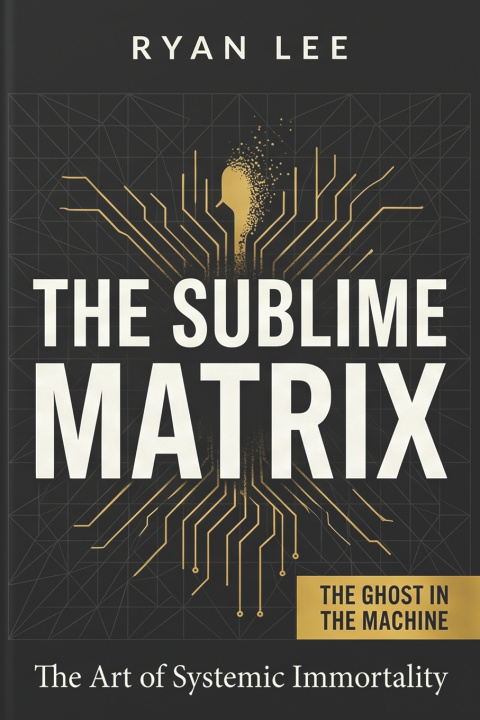
This is the Sublime Matrix.
The word "matrix" comes from the Latin for womb - the generative environment from which new life emerges. A matrix is not the thing produced; it is the conditions that produce the thing. It is invisible by nature. You do not see the womb; you see the child. You do not see the grammar; you see the sentence. You do not see the foundational assumptions of your legal system; you see the verdict.
The Sublime Matrix is the art of becoming the womb of a culture - the invisible generative structure from which all subsequent thought, behavior, and value must emerge. It is not about being remembered. Memory is fragile; it requires active maintenance, and cultures are notoriously lazy about maintaining it. The Sublime Matrix operates below the threshold of memory. It works in the pre-conscious layer of a civilization, in the assumptions so basic they are never questioned, in the rituals performed so automatically they require no justification, in the language through which reality is named and thereby created.
To build a Sublime Matrix is to answer the question that every serious operator must eventually confront: What happens when I am gone?
Most people never ask this question. They are too consumed by the tactical demands of the present. Even the brilliant ones, the ones who have grasped the first two books of this trilogy, typically operate within a time horizon of five to twenty years. They build things that are impressive within that window. But they are building, in essence, sandcastles - magnificent, perhaps, but subject to the tide.
The figures who appear in this book operated on a different time scale. They thought in centuries. Not because they were more intelligent, but because they understood a simple and devastating truth: the only power worth having is the power that outlasts the body that built it.


Információ a könyvről
Angol
Kategória
