
 Kapcsolat
 Hogyan vásároljunk

Kézbesítés
Vásárlási tanácsadó
 Angol
 42 b
 Új
Akár 30 napos visszaküldési lehetőség

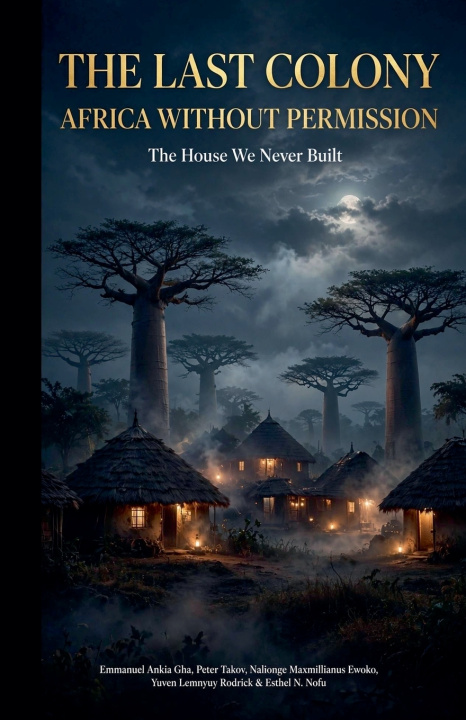
What if the colony never ended? What if it just moved from the map into our minds?
In 1884, Africa was divided at a table where no African figured. In 1960, flags were raised, anthems were sung, and the world declared Africa free. But the house that was handed back had never been built by its new occupants. The architecture was foreign. The furniture was imported. The manual was written in a language the owners barely understood. We became tenants in our own independence.
This is the central, provocative thesis of The Last Colony: Africa Without Permission. This book argues that political decolonization was only half the work. The most enduring, most dangerous colony remained: the colony in the mind. It is the last colony, and until it falls, Africa cannot truly rise.
This is not a book that blames the West for everything. It is not a book that romanticizes pre-colonial Africa. It is a hard-working, honest, and empowering book that asks one uncomfortable question and provides a bold African answer: Why, after more than sixty years of independence, with 60% of the world's uncultivated arable land, with the youngest population on earth, and with trillions in natural resources, does Africa still export raw materials to import finished goods, still wait for donor funding to solve its own problems, and still train its best children to leave?
The Rented House: A Diagnosis
The first part of the book, Chapters 1-4, diagnoses the rented house we inhabit. The authors, a unique collective of a Catholic University Deputy Vice Chancellor and bioethicist, a philosopher-principal, a medical researcher, an educator, and a development thinker, show how the colonial economy was designed to be extractive - and how we have faithfully maintained it.
We export 90% of our raw cashew nuts and import roasted cashews at ten times the price. We export crude oil and import fuel. We export cocoa and import chocolate. We export unprocessed logs and import toothpicks. The colonial master designed this to benefit the metropole. Why did we keep it?
Because the education system, the second pillar of the rented house, was designed to produce employees, not builders. As Yuven Lemnyuy Rodrick argues from his experience at Catholic High School Mankon, our schools teach young people to memorize answers to problems that Europe had, not to solve problems Africa has. A certificate becomes a passport to escape, not a tool to build. The result is what the book calls the Credential Mentality, the Consumption Mentality, and the Permission Mentality - a psychological complex where an African must be validated from outside before he is valuable inside.
Emmanuel Ankia Gha, in the foundational chapters, illustrates this with a simple financial principle that became famous in Smartworld lessons: When a community saves 1,054,000 FCFA together and generates 61,175 FCFA in interest, it proves that wealth is not what donors give us, but what we build together. Yet our national budgets still begin with "expected donor support." This is not economics; this is colonialism by another name.
The Darkness That Was Invented: Chapter 5
The heart of the book, and its most rigorous contribution, is Chapter 5: From the Dark Continent to the Light of Afrocracy, based on the research of Nalionge Maxmillianus Ewoko.


Információ a könyvről
Angol

Ajándékozza oda ezt a könyvet még ma
Nagyon egyszerű
1 Tegye a kosárba könyvet, és válassza ki a kiszállítás ajándékként opciót 2 Rögtön küldjük Önnek az utalványt 3 A könyv megérkezik a megajándékozott címéreSzia! Libroamiko vagyok, a könyvtanácsadód.
Miben segíthetek?