
 Kapcsolat
 Hogyan vásároljunk
Kézbesítés
Vásárlási tanácsadó
 Angol
Angol
 57 b
57 b
30 nap a termék visszaküldésére

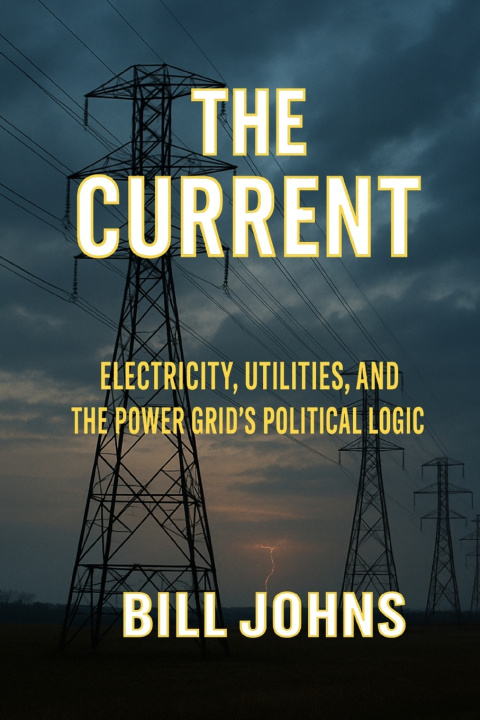
Electricity is the most invisible force of modern life, yet it governs every corner of our existence. The power grid, utilities, and the politics of energy shape not only what lights our homes but how authority, inequality, and resilience are defined in America. The Current: Electricity, Utilities, and the Power Grid's Political Logic is a sweeping history and cultural analysis of how wires, substations, and policies became the hidden skeleton of the United States, binding together democracy, capital, and daily survival.
From Edison's bulbs in Manhattan to Westinghouse's alternating current systems, the story of electricity has never been only about physics. It is about power in every sense-political, economic, and cultural. This book traces the rise of electrification, the monopoly battles that shaped access, the rural darkness that lingered into the twentieth century, and the New Deal's project to rewire citizenship through the Tennessee Valley Authority. It shows how electricity was woven into war, industrial expansion, and suburban life, while leaving enduring scars of inequality.
The narrative moves from world's fairs and illuminated cities to neighborhoods where rates were higher, service poorer, and promises deferred. It explores how electricity became securitized in World War II, weaponized in Cold War diplomacy, and commodified under deregulation and speculation. California's blackouts, Texas's winter storm collapse, and Puerto Rico's prolonged outages after Hurricane Maria are not presented as accidents of weather, but as events that reveal the deeper politics of reliability, resilience, and neglect.
The book also situates electricity within the household, where appliances and advertisements reshaped gender roles, consumer expectations, and cultural rituals. The glowing television became the new hearth of mid-century America, the socket a silent mediator of memory, and the kitchen a stage of electrified convenience. Yet these transformations were never neutral. They mirrored segregation, class hierarchies, and the politics of access. To be electrified was to belong; to remain unwired was to be excluded from modernity itself.
As the twenty-first century unfolds, electricity has fused with data. Smart meters, artificial intelligence, and digital grids turn consumption into surveillance, tracking routines as much as kilowatts. The rhetoric of resilience replaces the older rhetoric of abundance, yet resilience is distributed unequally-microgrids for wealthy neighborhoods and institutions, vulnerability for the poor. Renewable energy, heralded as clean transition, is entangled in contested corridors, supply chains, and new dependencies abroad. Electricity remains political, its myths of neutrality masking choices about who benefits and who bears the cost.
Bill Johns writes with the conviction of a cultural historian and the precision of a cybersecurity analyst. He brings to life the stories of operators who kept the grid stable, families who waited in darkness, and communities who knew the hum of wires carried promises as well as betrayals. The Current makes electricity visible again-not only as a technical system but as a political constitution defining citizenship, justice, and survival in the modern United States.
Readers of infrastructure, environmental politics, or cultural histories of technology will find in these pages a work that combines breadth with depth. It speaks to those who want to understand why the grid fails, why inequality persists, and why the future of energy is inseparable from democracy. The Current invites reflection not just on how power is generated and distributed, but on how societies remember, forget, and contest the infrastructures that sustain them. To engage with this history is to ask what kind of nation the wires beneath our feet are still building, and whether we are willing to see in them both warning and hope.


Információ a könyvről
Angol
