
 Kapcsolat
 Hogyan vásároljunk
Kézbesítés
Vásárlási tanácsadó
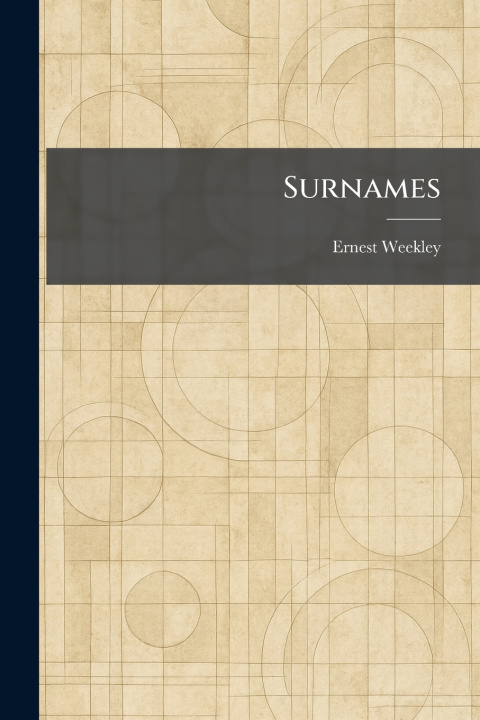
Surnames
 Angol
Angol
 65 b
65 b
Akár 30 napos visszaküldési lehetőség

"Surnames" is an authoritative and engaging exploration into the origins and evolution of family names, written by the distinguished philologist Ernest Weekley. This comprehensive study delves into the fascinating world of onomastics, tracing how surnames were derived from various sources such as occupations, locations, physical characteristics, and patronymics. Weekley provides a meticulous analysis of the linguistic transformations that have shaped English nomenclature over centuries, offering readers a deep understanding of the historical and social contexts that birthed these identifiers.
The work serves as both a scholarly resource and an accessible guide for anyone interested in genealogy, etymology, or social history. By examining thousands of names and their roots, Weekley reveals the rich tapestry of human history hidden within common and rare surnames alike. "Surnames" remains a foundational text for researchers and hobbyists, bridging the gap between rigorous linguistic study and the personal quest to understand one's own heritage. This classic volume highlights the intricate connections between language and identity, making it an essential addition to the library of any history or language enthusiast.
This work has been selected by scholars as being culturally important, and is part of the knowledge base of civilization as we know it. This work was reproduced from the original artifact, and remains as true to the original work as possible. Therefore, you may see the original copyright references, library stamps (as most of these works have been housed in our most important libraries around the world), and other notations in the work.
This work is in the public domain in the United States of America, and possibly other nations. Within the United States, you may freely copy and distribute this work, as no entity (individual or corporate) has a copyright on the body of the work.
As a reproduction of a historical artifact, this work may contain missing or blurred pages, poor pictures, errant marks, etc. Scholars believe, and we concur, that this work is important enough to be preserved, reproduced, and made generally available to the public. We appreciate your support of the preservation process, and thank you for being an important part of keeping this knowledge alive and relevant.


Információ a könyvről
Angol
