
 Kapcsolat
 Hogyan vásároljunk
Kézbesítés
Vásárlási tanácsadó
 Angol
Angol
 46 b
46 b
 Új
Új
Akár 30 napos visszaküldési lehetőség

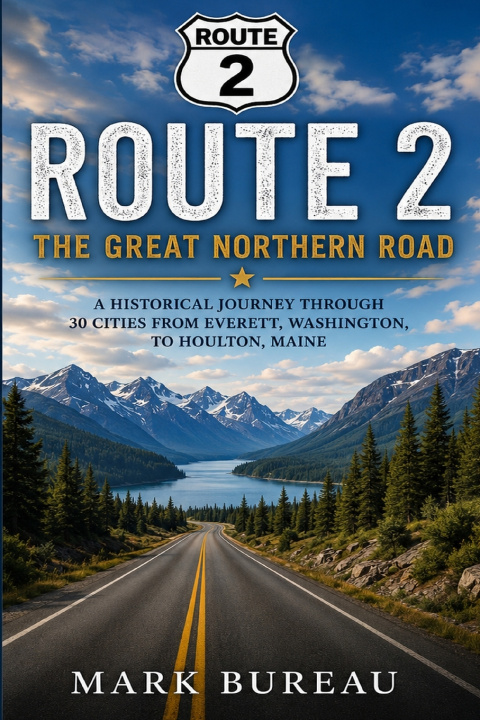
One road. Thirty cities. A northern history written in rivers, rails, forests, ports, mills, and Main Streets.
Route 2 - The Great Northern Road follows U.S. Route 2 from Everett, Washington, beside Puget Sound to Houlton, Maine, near the Canadian border. Across thirty richly illustrated chapters, Mark Bureau travels through the Cascades, the Rocky Mountain Front, the northern plains, the Great Lakes, Lake Champlain, the White Mountains, and the forests and river valleys of Maine.
This is more than a mile-by-mile account of a highway. It is the history of the communities that gave the road its character.
Each chapter looks beyond the familiar Route 2 shield to ask why a city or town grew where it did, which industries provided work, and how transportation connected local people with the wider country. Harbors and trestles, depots and grain elevators, mines and paper mills, bridges and ferries, libraries and courthouses all become evidence of the forces that shaped life along America's northern edge.
The journey begins beside Everett's working waterfront and crosses Washington's river valleys, farms, basalt country, and mountain passes. It follows railroads, rivers, forests, and open plains through Idaho, Montana, North Dakota, and Minnesota. At the Great Lakes, the road reaches ore docks, mining towns, waterfront industries, and the Straits of Mackinac.
When the western section of Route 2 ends at St. Ignace, a Canadian interlude connects the journey with the highway's eastern section. The familiar shield returns at Rouses Point, New York, before the road crosses Lake Champlain, northern Vermont, the White Mountains of New Hampshire, and the working towns of Maine.
Along the way, Route 2 - The Great Northern Road shows how geography became economy and how transportation changed everyday life. Water powered mills and opened ports. Railroads established towns and redirected trade. Highways changed older business districts while keeping isolated communities connected. Industries rose, declined, and adapted, but their influence remains visible in streets, buildings, waterfronts, bridges, and landscapes.
Written for road travelers, local-history readers, railroad enthusiasts, and anyone fascinated by the American landscape, Route 2 - The Great Northern Road turns a highway line on a map into a connected story of work, movement, endurance, and place.


Információ a könyvről
Angol

Ajándékozza oda ezt a könyvet még ma
Nagyon egyszerű
1 Tegye a kosárba könyvet, és válassza ki a kiszállítás ajándékként opciót 2 Rögtön küldjük Önnek az utalványt 3 A könyv megérkezik a megajándékozott címéreSzia! Libroamiko vagyok, a könyvtanácsadód.
Miben segíthetek?