Kapcsolat
 Hogyan vásároljunk
Kézbesítés
Vásárlási tanácsadó
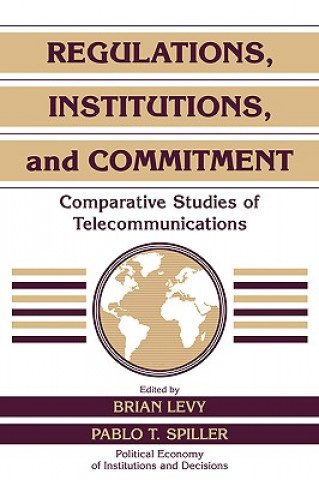
Regulations, Institutions, and Commitment
Comparative Studies of Telecommunications
 Angol
Angol
 157 b
157 b
Akár 30 napos visszaküldési lehetőség
A vásárlók ilyet vásároltak








The book assesses the impact of core political and social institutions on regulatory structures and performance in the telecommunications industry in Jamaica, the United Kingdom, Chile, Argentina, and the Philippines. These core institutions are shown to influence strongly the credibility and effectiveness of regulation, and thus its ability to encourage private investment and support efficiency. Currently, privatization and regulatory reform are often viewed as the solution to the problem of poor performance by telecommunications and other public utilities. This volume argues that these high expectations may not always be met because of the way a country's political and social institutions - its executive, legislative and judicial systems, its informal norms of public behaviour - interact with regulatory processes and economic conditions. In some environments, regulatory solutions run counter to the prevailing wisdom: achieving credible commitment may require an inflexible regulatory regime, and sometimes public ownership of utilities may be the only feasible alternative.


Információ a könyvről
Angol

Ajándékozza oda ezt a könyvet még ma
Nagyon egyszerű
1 Tegye a kosárba könyvet, és válassza ki a kiszállítás ajándékként opciót 2 Rögtön küldjük Önnek az utalványt 3 A könyv megérkezik a megajándékozott címéreEzt is ajánljuk



 /
/
 Kemény kötésű
 119 235
Ft
119 235
Ft


 /
Puha kötésű
15 090
Ft
/
Puha kötésű
15 090
Ft
 /
Puha kötésű
8 649
Ft
/
Puha kötésű
8 649
Ft