
 Kapcsolat
 Hogyan vásároljunk
Kézbesítés
Vásárlási tanácsadó
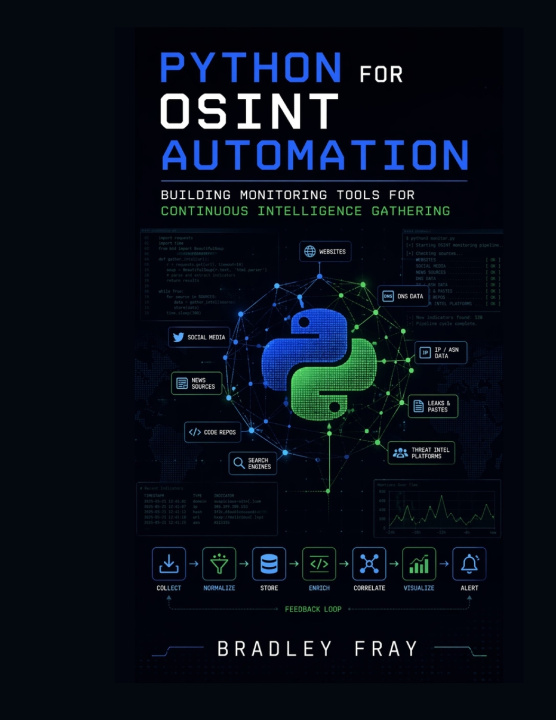
Python for OSINT Automation
Building Monitoring Tools for Continuous Intelligence Gathering
 Angol
Angol
 74 b
74 b
 Új
Új
30 nap a termék visszaküldésére

Most Python OSINT books hand you isolated code snippets and call it a system. This book builds the real thing: a production-grade monitoring pipeline that watches domains, social platforms, paste sites, and dark web forums continuously - alerting you when something changes before you had time to manually check.
Python for OSINT Automation is a practitioner's guide to moving from ad-hoc collection scripts to always-on intelligence systems. Every chapter delivers a deployable Python tool built on the CAMAP framework (Collect, Analyze, Monitor, Alert, Pipeline) - the architectural pattern that separates a working script from a monitoring system that recovers from failures, deduplicates findings, scores alerts by priority, and runs unattended on a remote server.
What you will build: automated WHOIS, DNS, and Certificate Transparency monitoring that catches new subdomains within minutes of issuance; social media bots that track keyword and entity mentions across Reddit, Twitter/X, and Telegram; paste site watchers that surface credential dumps hours before breach notification services; dark web forum scrapers routed through Tor with proper circuit management; document metadata extractors that surface EXIF geolocation, authorship signals, and organizational fingerprints; and a real-time alerting system with priority scoring, daily digest generation, and Slack/Telegram/email dispatch.
The final three chapters complete the operational picture: APScheduler and Celery for multi-interval job orchestration, Docker containerization and VPS deployment, and LLM-based summarization with entity resolution for converting raw findings into structured intelligence reports.
Who this is for: cybersecurity professionals, threat intelligence practitioners, and OSINT analysts who already know Python basics and want to replace manual workflows with systems that never stop watching.
What makes this different: competitor books cover API lookups and one-shot scripts. This book covers the layer they skip - state persistence, change detection, deduplication, scheduled orchestration, and the production deployment that makes a monitoring capability genuinely continuous.


Információ a könyvről
Angol
