
 Kapcsolat
 Hogyan vásároljunk
Kézbesítés
Vásárlási tanácsadó
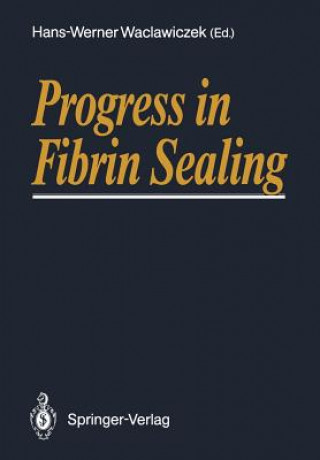
Progress in Fibrin Sealing
 Angol
Angol
 271 b
271 b
Akár 30 napos visszaküldési lehetőség
A vásárlók ilyet vásároltak







Fibrin plays a central role in wound healing. It has a hemostatic effect by forming a temporary wound closure and assists in neovascularization and fibroblast prolifera tion. It therefore makes the repair of injured or severed parts of the human body by simple glueing possible, a notion that men have dreamed of since ancient times. The first modern attempts in this direction, using clotting substances derived from human blood to achieve hemostasis, were reported by Bergel (in 1909), Grey (in 1915), and Harvey (in 1916), who used fibrin powder or fibrin patches to control bleeding from parenchymatous organs. Two decades later Young and Medawar (1940) and Cronkite (1944) used blood plasma or fibrin solutions, adding thrombin to seal nerve anastomoses and to fix skin grafts in humans. Due to the poor adhesive strength of the fibrinogen the results were unsatisfactory. In 1972 a new era in fibrin sealing was initiated by Matras. By using highly concentrated fibrinogen in combination with factor XIII (fibrin-stabilizing factor) and by delaying fibrinolysis with a fibrinolysis inhibitor (aprotinin), a method was developed which after satisfactory results in animals, soon began to be applied in humans.


Információ a könyvről
Angol
Kategória

Ajándékozza oda ezt a könyvet még ma
Nagyon egyszerű
1 Tegye a kosárba könyvet, és válassza ki a kiszállítás ajándékként opciót 2 Rögtön küldjük Önnek az utalványt 3 A könyv megérkezik a megajándékozott címéreEzt is ajánljuk
 /
/
 Puha kötésű
 34 966
Ft
34 966
Ft


 /
Kemény kötésű
20 646
Ft
/
Kemény kötésű
20 646
Ft

 /
Puha kötésű
3 365
Ft
/
Puha kötésű
3 365
Ft


Szia! Libroamiko vagyok, a könyvtanácsadód.
Miben segíthetek?