
 Kapcsolat
 Hogyan vásároljunk
Kézbesítés
Vásárlási tanácsadó
 Angol
Angol
 48 b
48 b
Akár 30 napos visszaküldési lehetőség

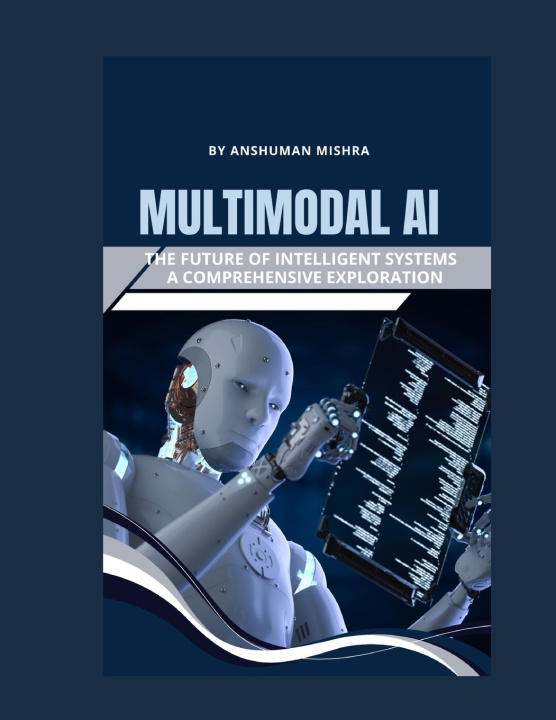
This in-depth exploration delves into the core concepts, architectures, applications, and future trajectory of "Multimodal AI: The Future of Intelligent Systems." Structured into four comprehensive parts, this book serves as a vital guide for researchers, practitioners, and anyone seeking to understand the transformative power of AI systems that can perceive and process information from multiple modalities. By seamlessly integrating insights from text, image, audio, sensor data, and more, multimodal AI promises to unlock a new era of intelligent systems capable of richer understanding, more nuanced interaction, and ultimately, more impactful real-world applications.
PART I: Fundamentals of Multimodal AI lays the groundwork by introducing the fundamental principles and challenges associated with building intelligent systems that transcend the limitations of single-modality processing.
Chapter 1: Introduction to Multimodal AI sets the stage by defining the core concept of multimodal AI. It elucidates how these systems aim to mirror human cognition by integrating and interpreting information from diverse sources. The chapter meticulously dissects the understanding of multimodal systems, highlighting the inherent complexity and the potential for synergistic information gain when different modalities are combined. For instance, understanding a news report becomes significantly richer when textual information is coupled with relevant images or videos. Similarly, a spoken command gains clarity when accompanied by visual cues or gestures.
The chapter further addresses the key challenges and opportunities within this burgeoning field. Challenges include the heterogeneity of data formats, the difficulty in aligning and fusing information from disparate sources, the computational demands of processing high-dimensional multimodal data, and the semantic gap between low-level sensory inputs and high-level conceptual understanding. However, these challenges are counterbalanced by immense opportunities. Multimodal AI promises enhanced robustness, improved accuracy, and the ability to tackle tasks that are inherently multimodal in nature, such as understanding human emotions through facial expressions and tone of voice, or navigating complex environments using visual and sensor data.
Finally, Chapter 1 showcases compelling real-world applications and use cases that underscore the transformative potential of multimodal AI. Examples span various domains, including:
- Human-Computer Interaction: More natural and intuitive interfaces that understand speech, gestures, and gaze.
- Robotics: Robots capable of navigating complex environments, manipulating objects based on visual and tactile feedback, and interacting seamlessly with humans.
- Healthcare: Enhanced medical diagnosis through the integration of imaging data, patient history, and genomic information.
- Autonomous Driving: Safer and more reliable self-driving cars that fuse data from cameras, lidar, radar, and other sensors.
- Content Understanding: More accurate and context-aware analysis of multimedia content, including image and video captioning, and cross-modal retrieval.


Információ a könyvről
Angol

Ajándékozza oda ezt a könyvet még ma
Nagyon egyszerű
1 Tegye a kosárba könyvet, és válassza ki a kiszállítás ajándékként opciót 2 Rögtön küldjük Önnek az utalványt 3 A könyv megérkezik a megajándékozott címéreSzia! Libroamiko vagyok, a könyvtanácsadód.
Miben segíthetek?