
 Kapcsolat
 Hogyan vásároljunk
Kézbesítés
Vásárlási tanácsadó
 Angol
Angol
 116 b
116 b
 Új
Új
Akár 30 napos visszaküldési lehetőség

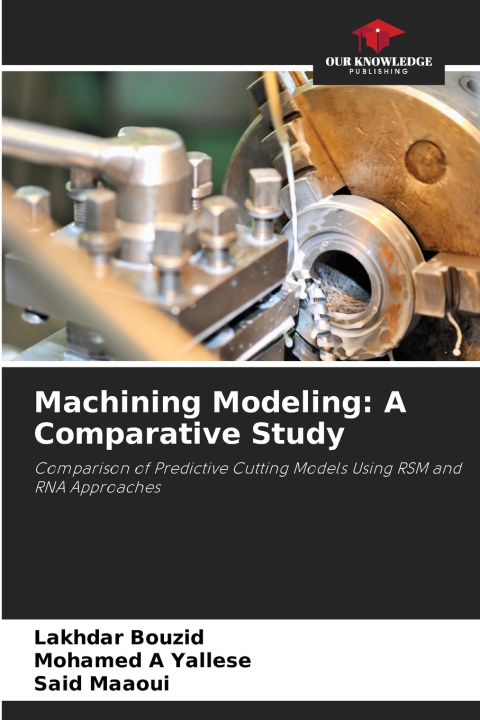
During machining, the conditions for success are determined in the cutting zone. In this context, the relationship between cutting conditions (cutting speed, feed rate, depth of cut, and tool type) and surface roughness (Ra and Rt) represents a major industrial objective. This work focuses on an experimental study examining the effects of cutting parameters on surface roughness, obtained during the machining of 42Cd4 steel (AISI 4140) hardened to 60 HRC, machined via dry hard turning using ceramic and metal carbide tools. The study is divided into two parts: the first focuses on proposing mathematical models to predict surface roughness, based on two modeling methods: the response surface methodology (RSM) and artificial neural networks (ANNs). The second part involves comparing the results of the two modeling methods-RSM and ANNs-in order to select the most effective one. Based on the comparative study, the ANN models proved to be better at predicting surface roughness within the range of the experiments conducted than the SRM models.


Információ a könyvről
Angol

Ajándékozza oda ezt a könyvet még ma
Nagyon egyszerű
1 Tegye a kosárba könyvet, és válassza ki a kiszállítás ajándékként opciót 2 Rögtön küldjük Önnek az utalványt 3 A könyv megérkezik a megajándékozott címéreSzia! Libroamiko vagyok, a könyvtanácsadód.
Miben segíthetek?