Ingyenes szállítás 19 990 Ft feletti rendelés esetén – Packeta, Fox Post Box és DPD csomagpont átvétellel

Legyen része a világ minden tájáról összegyűlt könyvbarátok közösségének és élvezze a rengeteg előnyt.
Ingyenes regisztráció
Ingyenes szállítás a FoxPost futárszolgálattal, 19 990 Ft feletti vásárlás esetén
DPD gyűjtőpont 990 Ft
DPD futárszolgálat 1 190 Ft
GLS pont 1 190 Ft
Magyar Posta 1 795 Ft
PostaPont / Csomagautomata 1 690 Ft
Magyar Posta 1 690 Ft
FoxPost 1 190 Ft
Packeta 1 190 Ft
GLS futár 1 690 Ft
 Kapcsolat
 Hogyan vásároljunk
Segítség
Kézbesítés
DPD gyűjtőpont 990 Ft
DPD futárszolgálat 1 190 Ft
GLS pont 1 190 Ft
Magyar Posta 1 795 Ft
PostaPont / Csomagautomata 1 690 Ft
Magyar Posta 1 690 Ft
FoxPost 1 190 Ft
Packeta 1 190 Ft
GLS futár 1 690 Ft
Ingyenes szállítás a FoxPost futárszolgálattal, 19 990 Ft feletti vásárlás esetén
Vásárlási tanácsadó
Segíthetünk?
+36 9 6998 040
Saját fiók
▸
Üres :-(
0
Ingyenes szállítás 19 990 Ft feletti rendelés esetén – Packeta, Fox Post Box és DPD csomagpont átvétellel
GET PAID WITHOUT THE AWKWARD
Automate Your Accounts Receivable Follow-Up While Keeping the Human in Control
Nyelv
 Angol
Angol
Angol
Könyv
Puha kötésű
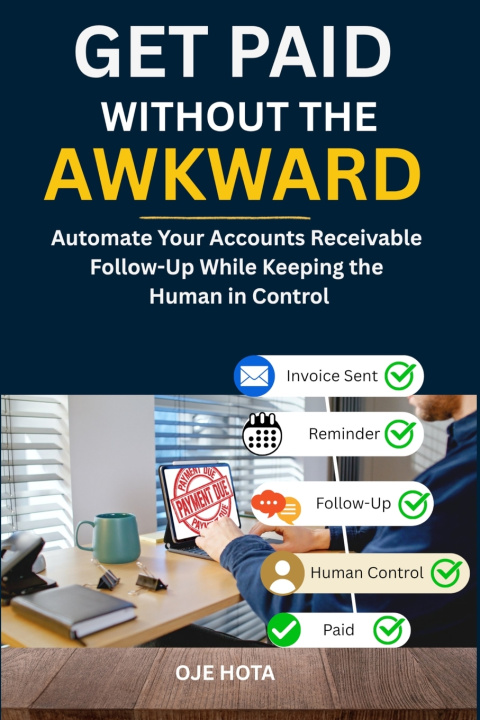
Get Paid Without the Awkward How to Automate Invoice Follow-Up While Keeping the Human in ControlYou...
Teljes leírás
Libristo kód: 54066347
?
 62 b
62 b
 Új
Új
62 b
Új
9 386
Ft
Beszállítói készleten
Küldés 10-16 napon belül
Akár 30 napos visszaküldési lehetőség

Get Paid Without the Awkward
How to Automate Invoice Follow-Up While Keeping the Human in Control
You don't need another reminder template. You need a system that remembers what needs to happen, prepares the next action, and knows when to stop.
If you run a small business and regularly find yourself checking aging invoices, rewriting the same follow-up emails, and wondering who needs attention today, this book shows you how to replace that recurring work with a practical invoice follow-up system.
The machine handles the remembering. The human handles the judgment.
Inside, you'll learn how to build a system that:
- Monitors open invoices and determines when follow-up is due
- Tracks each invoice through a clear six-state process
- Prepares follow-up messages without sending them automatically
- Lets you approve, skip, or hold individual reminders
- Pauses the sequence when a customer gives you a reason to wait
- Stops the follow-up process when payment is received
- Escalates invoices that reach the end of the sequence instead of endlessly sending reminders
- Records what happened so you can see the state of every invoice
- Measures changes in follow-up time, DSO, and aging distribution
This is not a book about sending automated emails and hoping for the best.
It walks you through the actual workflow: capture the invoice, determine its state, decide what should happen next, prepare the action, put the human in control, record the result, and check again.
You'll build the system step by step using QuickBooks Online, n8n, Gmail, Google Sheets, and optional Slack. The book also explains how to translate the underlying workflow to other accounting platforms.
You'll see the awkward parts too: duplicate drafts, partial payments, invoices that should be put on hold, timezone problems, reconciliation errors, and the situations where an automation that looks correct can still behave incorrectly.
The goal isn't to remove the human from accounts receivable.
It's to remove the repetitive work that keeps the human busy.
Get the system remembering what needs to happen. Keep the judgment where it belongs.
Színésznő
&
Poliglott
EWA KASP
részére
A videó lejátszása


A Libristo rendelkezik az idegennyelvű könyvek legnagyobb kínálatával. Ezért vásárolom a könyveket itt.
Információ a könyvről
Teljes megnevezés
GET PAID WITHOUT THE AWKWARD
Szerző
Oje Hota
Nyelv
Angol
Angol
Kötés
Könyv - Puha kötésű
Kiadás éve
2026
Oldalszám
244
EAN
9798178464182
Libristo kód
54066347
Kiadó
Independently published
Súly
333
Méretek
152 x 229 x 13

Ajándékozza oda ezt a könyvet még ma
Nagyon egyszerű
1 Tegye a kosárba könyvet, és válassza ki a kiszállítás ajándékként opciót 2 Rögtön küldjük Önnek az utalványt 3 A könyv megérkezik a megajándékozott címére
Libroamiko könyvtanácsadó
A chat használatával generatív mesterséges intelligenciával kommunikálsz. A használatával beleegyezel a személyes adatok kezelésébe is.
Szia! Libroamiko vagyok, a könyvtanácsadód.
Miben segíthetek?
Szia, Libroamiko vagyok, segíthetek?