
 Kapcsolat
 Hogyan vásároljunk
Kézbesítés
Vásárlási tanácsadó
 Angol
Angol
 63 b
63 b
30 nap a termék visszaküldésére

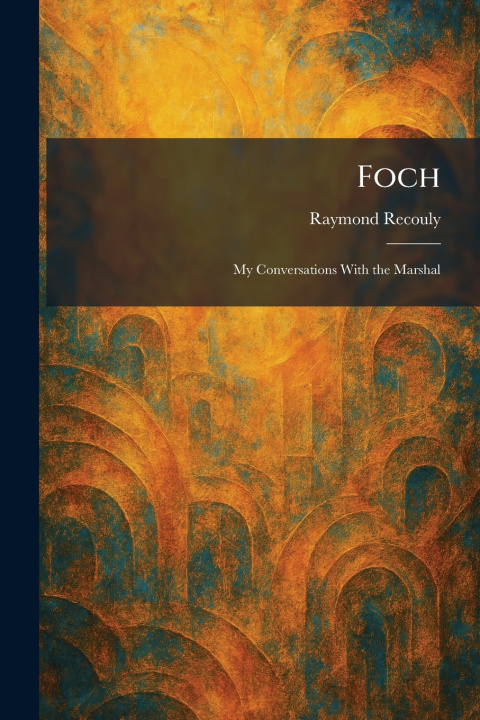
"Foch; My Conversations With the Marshal" offers an intimate and profound look into the mind of Marshal Ferdinand Foch, the supreme commander of the Allied Armies during the final stages of World War I. Written by Raymond Recouly, a journalist and confidant of the Marshal, this work records a series of candid discussions that took place between the end of the Great War and Foch's death in 1929.
Through these pages, readers gain firsthand access to Foch's perspectives on the most pivotal moments of the conflict, his strategic decisions on the Western Front, and his firm beliefs regarding the Treaty of Versailles and the future security of Europe. The book moves beyond official reports to reveal the personal character, intellectual rigor, and unwavering determination of one of history's most significant military leaders. Recouly skillfully captures Foch's reflections on leadership, the nature of war, and the complexities of international diplomacy.
A vital primary source for historians and military enthusiasts alike, "Foch; My Conversations With the Marshal" serves as a timeless study of high command and the immense burden of wartime responsibility. It provides a unique window into the thoughts of a man whose vision helped shape the outcome of the 20th century's first global catastrophe.
This work has been selected by scholars as being culturally important, and is part of the knowledge base of civilization as we know it. This work was reproduced from the original artifact, and remains as true to the original work as possible. Therefore, you may see the original copyright references, library stamps (as most of these works have been housed in our most important libraries around the world), and other notations in the work.
This work is in the public domain in the United States of America, and possibly other nations. Within the United States, you may freely copy and distribute this work, as no entity (individual or corporate) has a copyright on the body of the work.
As a reproduction of a historical artifact, this work may contain missing or blurred pages, poor pictures, errant marks, etc. Scholars believe, and we concur, that this work is important enough to be preserved, reproduced, and made generally available to the public. We appreciate your support of the preservation process, and thank you for being an important part of keeping this knowledge alive and relevant.


Információ a könyvről
Angol
