
 Kapcsolat
 Hogyan vásároljunk
Kézbesítés
Vásárlási tanácsadó
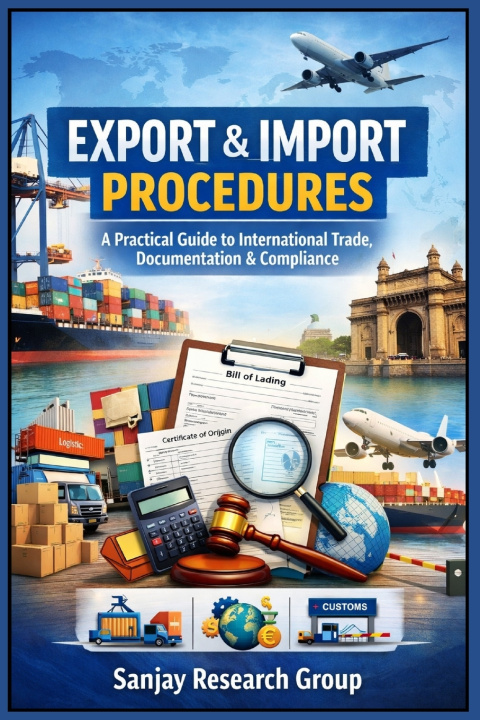
Export & Import Procedures
A Practical Guide to International Trade, Documentation & Compliance
 Angol
Angol
 88 b
88 b
 Új
Új
30 nap a termék visszaküldésére

Export & Import Procedures: A Practical Guide to International Trade, Documentation & Compliance is a complete roadmap to understanding and executing international trade operations efficiently and legally.
This book is structured in a logical and progressive manner, starting from basic concepts and gradually moving toward advanced global trade practices and emerging technologies.
Chapter 1: Foundation of International Trade
The book begins by explaining the meaning, objectives, scope, and importance of export and import. It establishes a strong conceptual base for students and beginners while highlighting the role of international trade in economic development.
Chapter 2 & 3: Step-by-Step Export and Import Procedures
These chapters provide a practical breakdown of the entire export and import process, including:
- Registration requirements such as IEC
- Product and market selection
- Documentation preparation
- Customs clearance procedures
- Duties, taxes, and trade agreements
Chapter 4: Payment and Trade Finance
International trade involves financial risks and currency management. This chapter explains payment methods like Letter of Credit, export financing, foreign exchange management under FEMA guidelines, and risk mitigation strategies.
Chapter 5: Logistics and Transportation
This section focuses on shipping, airlines, containerization, packaging, Incoterms, warehousing, and the role of freight forwarders and customs brokers. It connects trade theory with real-world operational flow.
Chapter 6: Legal and Regulatory Framework
A detailed explanation of Indian and international trade regulations, including references to authorities such as the Directorate General of Foreign Trade and the Central Board of Indirect Taxes and Customs.
Global governance through institutions like the World Trade Organization is also discussed to provide international perspective.
Chapter 7: Documentation and Digital Systems
Covers standard export-import documents, record keeping, audits, and the use of digital customs platforms such as ICEGATE.
Chapter 8: Challenges and Risk Management
Explains practical risks like credit risk, political instability, currency fluctuation, and dispute resolution mechanisms.
Chapter 9: Emerging Trends
The final chapter explores the future of global trade, including:
- AI and automation
- Blockchain documentation
- Smart ports
- Sustainable logistics
- IoT-based tracking
- E-commerce exports
What Makes This Book Unique?
- Structured academic + practical approach
- Indian regulatory focus with global context
- Step-by-step procedural clarity
- Updated with modern trade innovations
- Suitable for both students and working professionals
- Sanjay Research Group


Információ a könyvről
Angol
