
 Kapcsolat
 Hogyan vásároljunk
Kézbesítés
Vásárlási tanácsadó
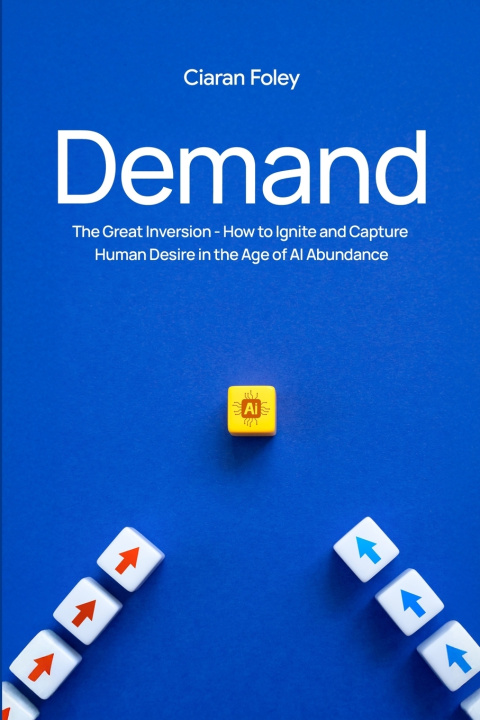
Demand
The Great Inversion - How to Ignite & Capture Human Desire in the Age of Al Abundance
 Angol
Angol
 39 b
39 b
 Új
Új
30 nap a termék visszaküldésére

In Demand: The Great Inversion, technologist, futurist, and serial entrepreneur Ciaran Foley argues that we are living through the most significant competitive shift in a generation, and most businesses haven't noticed yet.
They are still optimizing for production in a world where production is free. They are still chasing attention in a world where attention is worthless. They are still building what they think is impressive, while ignoring the only thing that matters: building what people actually want.
Who should read Demand? If you are an entrepreneur, technologist, developer, or leader building a personal brand, product, or service, this book provides the fundamental insights you need to deliver the solutions the world actually wants, reduce your time-to-market, and accelerate your growth.
Drawing on neuroscience, behavioral economics, and the stories of companies that cracked the new code early, Foley maps out exactly how the winners:
- Spot genuine human desire before their competitors
- Validate ideas before investing a single dollar in building
- Create communities so loyal that they become the ultimate competitive moat
Demand provides a complete operating system for the new economy. You will learn how to detect weak signals in the noise before they become obvious trends; how to use AI not just to build faster, but to listen at a scale no human team can match; and how to build the kind of authentic trust that cannot be copied, purchased, or automated away.
INTRODUCTION
Something fundamental has broken. For centuries, the central problem of business was supply: how to make enough, fast enough, and cheaply enough. Competitive advantage belonged to those who built the best factories, filed the best patents, and moved products through the widest distribution channels.
The rules were clear. The playbook was proven. Then, AI arrived and rewrote everything.
When generative AI crossed its threshold, it didn't just automate tasks; it shattered the economic assumption that production was hard. Suddenly, anyone with an internet connection could generate code, content, design, and analysis at effectively zero marginal cost. Supply became, for the first time in human history, nearly infinite.
In doing so, it has made something else impossibly scarce: demand.


Információ a könyvről
Angol
