
 Kapcsolat
 Hogyan vásároljunk
Kézbesítés
Vásárlási tanácsadó
 Angol
Angol
 217 b
217 b
 Hamarosan
 Új
Új
Akár 30 napos visszaküldési lehetőség

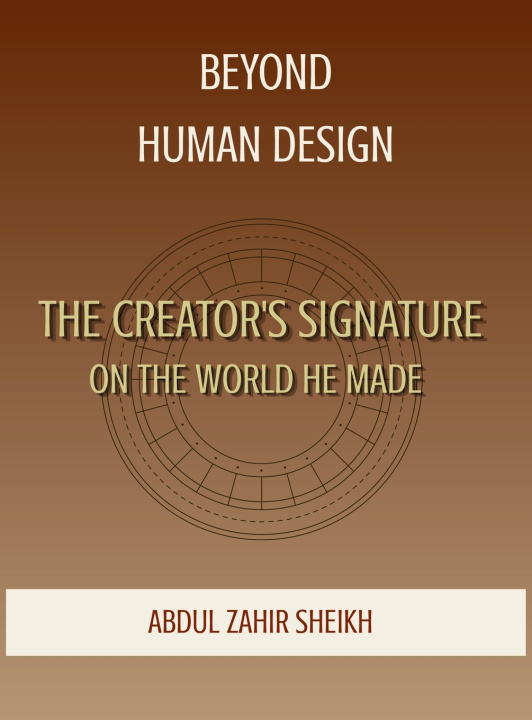
A man-made book gets the universe wrong. This one got it right - before the telescope, the microscope, and the submersible.
"We will show them Our signs in the horizons and within themselves, until it becomes clear to them that it is the truth." - Quran 41:53. The first two volumes worked the Quran from the inside - its architecture, its consistency, its impossible design. This third turns to a second scene entirely, the physical world the text describes, and puts the question that settles any case of disputed authorship: did the same hand sign both? The horizons and the self are the two scenes it searches.
Seventy witnesses are called, from fourteen domains - the structure and expansion of the cosmos, the forming and balancing of the earth, the boundaries set within the seas, the sealed stages by which a human being is formed, the hidden systems of the living body. In each, a specific seventh-century statement is set beside settled, peer-reviewed science, and admitted only on a strict rule: the claim must be precise, the science established, and the author without any ordinary means of knowing it. As throughout the series, the science is not the author's but the independent work of specialists, weighed like expert reports in a file. A universe described as still expanding, in the active present tense. A heaven and earth once a single mass, then parted. A sky called smoke before it was stars. Mountains set as stabilising pegs; a barrier between two seas that will not mix; a human being formed in sealed stages in the dark - each a concrete claim a seventh-century desert society had no instrument, and no inherited learning, to supply.
Faith asks you to look up and believe. This asks you to look up and check.
No probability is offered here, and none is needed. The work is identification - correspondence after correspondence until coincidence stops being a serious account of them. Each domain was chosen because it is a place a seventh-century author could be caught out, where a wrong guess would now stand exposed by settled science. The test is built to fail if the author was guessing. Across seventy statements in fourteen fields, it does not fail once. One correspondence is easy to wave away as luck; seventy, from disciplines that do not overlap, is not. Where a guess would scatter, these statements line up; where a forger would collide with the record, this author runs parallel to it, again and again.
Seventy times, a seventh-century text describes a physical reality no one alive could have verified. Seventy times, modern science confirms it.
Read with the first two volumes, the trilogy now stands at 103 witnesses, reached by three methods that share no assumptions - internal architecture, qualitative testimony, and correspondence with creation - and yet name one author. Methods this independent do not agree unless they are tracking something real. The internal architecture established that the design exceeds human reach; the qualitative case proved it again without a number; now the made world signs the same name. You live in a cosmos that was described before it was discovered: you are not lost in it, you are addressed by it.
Written by Abdul Zahir Sheikh, a Certified Fraud Examiner and forensic professional with four decades of investigative experience across fourteen countries, this volume changes the reasonable question: not how a man knew these things, but whether a man is the author at all.
Two signatures - one on the Quran, one on creation. Hold them to the light, and they are the same. What follows is yours to decide.


Információ a könyvről
Angol

Ajándékozza oda ezt a könyvet még ma
Nagyon egyszerű
1 Tegye a kosárba könyvet, és válassza ki a kiszállítás ajándékként opciót 2 Rögtön küldjük Önnek az utalványt 3 A könyv megérkezik a megajándékozott címéreSzia! Libroamiko vagyok, a könyvtanácsadód.
Miben segíthetek?