
 Kapcsolat
 Hogyan vásároljunk
Kézbesítés
Vásárlási tanácsadó
 Angol
Angol
 28 b
28 b
 Hamarosan
 Új
Új
Akár 30 napos visszaküldési lehetőség

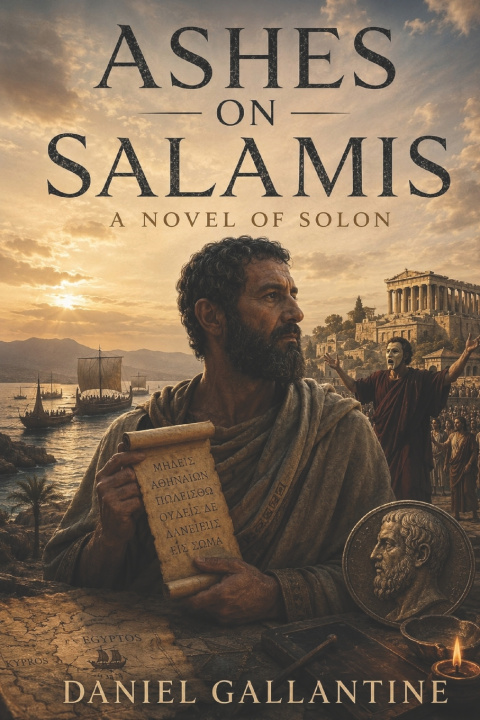
Solon is the ninth life in the Ancient Civilisations series. He fixed a crisis no one fully thanked him for, left the city for ten years so no one could pressure him into unfixing it, and came home just in time to watch a relative seize by theater what his own laws had been built specifically to prevent.
A merchant-poet of aristocratic birth but diminished family fortune, Solon first won Athenian fame through calculated theater: feigning madness to recite, before a startled crowd, a poem reigniting the city's abandoned claim to the island of Salamis: a performance that launched the military campaign, complete with disguised ambush and Spartan arbitration, that secured the island for Athens for good. That early triumph established the pattern of his entire public career: a man equally capable of poetry, tactical cunning, and persuasive argument, called upon a generation later to resolve a debt crisis so severe that ordinary Athenians faced enslavement for unpaid obligations while the city itself teetered toward civil war or tyranny.
Appointed archon with extraordinary, unprecedented powers in 594 BC, Solon cancelled debt-bondage, recovered Athenians already sold into slavery abroad, and restructured citizenship around demonstrated wealth rather than inherited birth, reforms that were immediately complicated by a documented insider-trading scandal among his own associates, who profited from advance knowledge of the very debt cancellation meant to help the poor. The resulting compromise satisfied no faction completely: aristocrats resented their lost exclusive privilege, the poor resented reforms that stopped short of full land redistribution, and Solon himself, having had genuine opportunity to seize outright tyranny and deliberately declined it, bound the city to a ten-year oath not to alter his laws before deliberately leaving Athens, specifically so his own continued presence could not be used to pressure him into amending them.
His decade of calculated exile carried him to Egypt and to Cyprus, where a king named an entire city in his honor, and to the court of King Croesus of Lydia for the celebrated exchange about the nature of true happiness, an episode this novel dramatizes in full while being honest that ancient and modern scholars alike regard the meeting as almost certainly chronologically impossible, a beloved legend rather than verified history. Returning home, Solon found his laws still standing but watched, with bitter, documented anger, as his own relative Peisistratus seized power through calculated political theater his own citizens had the means to resist and simply declined to use.
This novel follows Solon from the feigned madness that first won him the island of Salamis through the debt crisis he resolved imperfectly but consequentially, a decade of travel that carried him from Egyptian temples to a Lydian throne, and a bitter homecoming that watched tyranny take root within the very laws built to prevent it, through to his death in Cyprus and the documented tradition that his ashes were scattered on the same island where his public life had begun, closing a perfectly circular life exactly where it started.
A vivid, intellectually honest reconstruction of the lawgiver who understood, with unusual clarity for his time, that durable compromise satisfies no one completely, and who chose, at real personal cost, physical absence over continued power as the best guarantee his own reforms could actually survive him.
Ashes on Salamis is the ninth novel in the Ancient Civilisations series.


Információ a könyvről
Angol

Ajándékozza oda ezt a könyvet még ma
Nagyon egyszerű
1 Tegye a kosárba könyvet, és válassza ki a kiszállítás ajándékként opciót 2 Rögtön küldjük Önnek az utalványt 3 A könyv megérkezik a megajándékozott címéreSzia! Libroamiko vagyok, a könyvtanácsadód.
Miben segíthetek?