Ingyenes szállítás 19 990 Ft feletti rendelés esetén – Packeta, Fox Post Box és DPD csomagpont átvétellel

Legyen része a világ minden tájáról összegyűlt könyvbarátok közösségének és élvezze a rengeteg előnyt.
Ingyenes regisztráció
Ingyenes szállítás a FoxPost futárszolgálattal, 19 990 Ft feletti vásárlás esetén
DPD gyűjtőpont 990 Ft
DPD futárszolgálat 1 190 Ft
GLS pont 1 190 Ft
Magyar Posta 1 795 Ft
PostaPont / Csomagautomata 1 690 Ft
Magyar Posta 1 690 Ft
FoxPost 1 190 Ft
Packeta 1 190 Ft
GLS futár 1 690 Ft
 Kapcsolat
 Hogyan vásároljunk

Segítség
Kézbesítés
DPD gyűjtőpont 990 Ft
DPD futárszolgálat 1 190 Ft
GLS pont 1 190 Ft
Magyar Posta 1 795 Ft
PostaPont / Csomagautomata 1 690 Ft
Magyar Posta 1 690 Ft
FoxPost 1 190 Ft
Packeta 1 190 Ft
GLS futár 1 690 Ft
Ingyenes szállítás a FoxPost futárszolgálattal, 19 990 Ft feletti vásárlás esetén
Vásárlási tanácsadó
Segíthetünk?
+36 9 6998 040
Saját fiók
▸
Üres :-(
0
Ingyenes szállítás 19 990 Ft feletti rendelés esetén – Packeta, Fox Post Box és DPD csomagpont átvétellel
AI WEAPONS
When Machines Decide Over Life: Autonomous Weapon Systems, Accountability and International Regulation
Nyelv
 Angol
Angol
Könyv
Puha kötésű
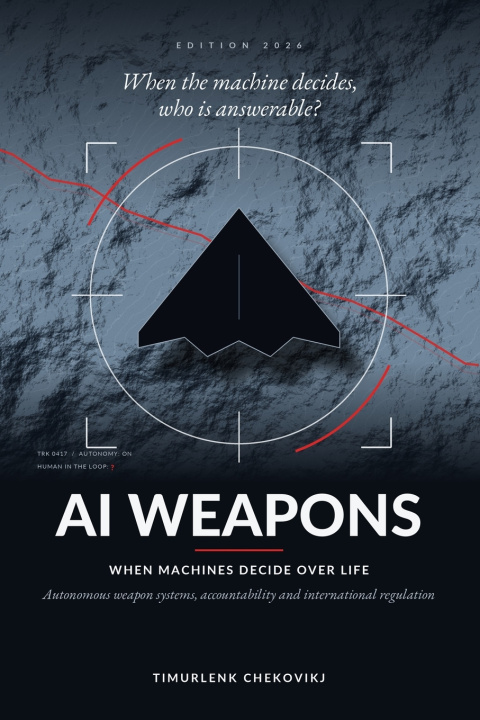
Who answers when a machine decides?Autonomous weapons, AI-assisted targeting and autonomous cyber ag...
Teljes leírás
Libristo kód: 54322559
?
 22 b
 Hamarosan
 Új
22 b
Hamarosan
Új
3 324
Ft
Várható készletfeltöltés
Küldés 01. 11. 2026
Akár 30 napos visszaküldési lehetőség

Who answers when a machine decides?
Autonomous weapons, AI-assisted targeting and autonomous cyber agents each promise speed and precision. Each also strains the oldest rule of war: someone must answer for the use of force.This book follows the accountability gap through three dimensions: technical (can the system be tested and its decisions reconstructed?), legal (what is binding law, and what is only a political promise?) and organisational (who really decides, and who answers?).
Inside this edition
- What the 2026 UN expert process under the CCW did and did not agree, separating binding law, political commitments and proposed rules
- Why human oversight often fails in practice: automation bias, time pressure and the "moral crumple zone"
- Drones from Predator to Kızılelma, decision-support targeting, and the reported ECHOTRIBBLE autonomous cyber-agent programme
- How a few companies and data centres now shape military AI
- Satellite imagery, wildfire AI and the surveillance problem
- Testing and red teaming of unmanned and autonomous systems
- Nuclear command, and the position of small states in the Western Balkan
Written for policy analysts, lawyers, students, military professionals and informed readers.
An analytical work based on public sources, current to 15 October 2026. It contains no classified information or operational detail.
Színésznő
&
Poliglott
EWA KASP
részére
A videó lejátszása


A Libristo rendelkezik az idegennyelvű könyvek legnagyobb kínálatával. Ezért vásárolom a könyveket itt.
Információ a könyvről
Teljes megnevezés
AI WEAPONS
Szerző
Timurlenk Chekovikj
Nyelv
Angol
Angol
Kötés
Könyv - Puha kötésű
Kiadás éve
2026
Oldalszám
114
EAN
9798165927423
Libristo kód
54322559
Kiadó
Independently published
Súly
165
Méretek
152 x 229 x 6

Ajándékozza oda ezt a könyvet még ma
Nagyon egyszerű
1 Tegye a kosárba könyvet, és válassza ki a kiszállítás ajándékként opciót 2 Rögtön küldjük Önnek az utalványt 3 A könyv megérkezik a megajándékozott címére
Libroamiko könyvtanácsadó
A chat használatával generatív mesterséges intelligenciával kommunikálsz. A használatával beleegyezel a személyes adatok kezelésébe is.
Szia! Libroamiko vagyok, a könyvtanácsadód.
Miben segíthetek?
Szia, Libroamiko vagyok, segíthetek?