
 Kapcsolat
 Hogyan vásároljunk
Kézbesítés
Vásárlási tanácsadó
 Angol
Angol
 55 b
55 b
 Új
Új
Akár 30 napos visszaküldési lehetőség

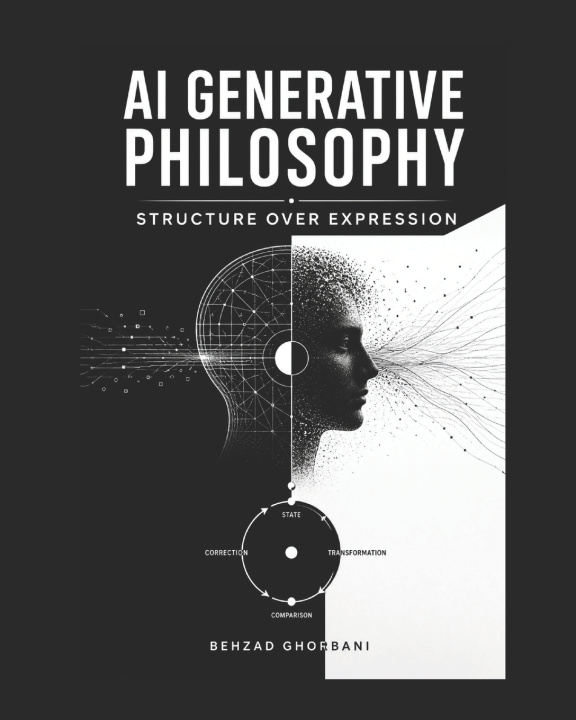
We are entering a moment where expression has become abundant. Systems such as ChatGPT can generate fluent, structured, and convincing text instantly. Publicly, this has been received as a breakthrough in intelligence; a sense that answers are now readily available, that knowledge has accelerated, that thinking itself has been amplified. Yet beneath this surface, something more subtle is occurring. When expression becomes effortless, it ceases to indicate understanding. The ability to produce a coherent answer no longer guarantees that the structure behind it exists. This shift exposes a gap that has always been present but was previously hidden. Much of what passes as knowledge is based on recognition rather than construction; selecting from familiar patterns rather than building relations that hold under change. Generative systems make this visible. They can produce outputs that appear consistent within a single instance, yet drift, contradict, or fragment when conditions vary. The problem is not that they are incorrect; it is that coherence alone is insufficient as a criterion of thought.
This book begins from that observation. It develops what can be called a generative philosophy; an approach in which ideas are not treated as finished statements, but as systems that must be constructed, tested, and stabilised. The focus shifts from what is said to how it holds. A claim is no longer evaluated by its clarity or persuasiveness, but by its behaviour under variation; whether its relations persist when parameters change, when contexts shift, and when it is forced to integrate with prior states.
To do this, the book builds a minimal framework for recursive thinking. Ideas are treated as evolving configurations; states that are transformed, compared, and corrected across iterations. Stability emerges when discrepancy remains bounded, not when a final answer is declared. Failure becomes essential, as it defines the limits within which a formulation applies. This process replaces assertion with consequence; instead of stating what is true, the system specifies what follows if its conditions are met. The framework is then extended across domains, showing that similar relational patterns appear in physical systems, biological processes, cognition, and social behaviour. What differs is not the structure, but the constraints under which it operates. This allows transfer without reduction; preserving the specificity of each domain while identifying shared mechanisms of stability and change.
In education, the implications are immediate. When complete answers are accessible, teaching cannot rely on output as evidence of learning. It must instead make the process visible; requiring intermediate states, exposing mismatch, and reinforcing iteration. Generative tools are repositioned as sources of variation, while human judgement becomes responsible for imposing structure and validating outcomes.
The result is a shift in what it means to think. Thought is no longer the production of answers, but the design and maintenance of structures that persist under constraint. Novelty is recovered not by generating more content, but by resisting premature closure and allowing deeper relations to emerge. Progress is defined by systems that hold across variation and specify their limits.
This is a method; a way of working in a context where expression is no longer scarce, and where the value of thought lies in what remains when variation is applied.


Információ a könyvről
Angol

Ajándékozza oda ezt a könyvet még ma
Nagyon egyszerű
1 Tegye a kosárba könyvet, és válassza ki a kiszállítás ajándékként opciót 2 Rögtön küldjük Önnek az utalványt 3 A könyv megérkezik a megajándékozott címéreSzia! Libroamiko vagyok, a könyvtanácsadód.
Miben segíthetek?