
 Contact
 How to shop
Delivery
Shopping guide
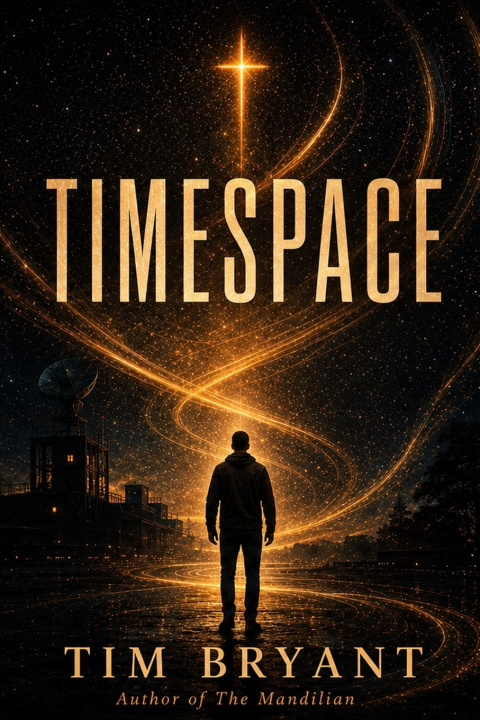
Timespace
 English
 47 b
47 b
 New
New
Up to 30 days for returns

At 02:17, a storage building on the eastern edge of a research campus began reporting interior dimensions that didn't fit inside itself.
Miriam Vale has spent years running the Metric Coherence Array - a machine designed to probe the hidden geometry of spacetime. She is precise, controlled, and very good at not letting personal history interfere with method. But when the Array's first live test causes an abandoned chapel on campus to hold nearly nine feet more interior than its exterior walls allow, Miriam walks into a room that refuses to behave like a room.
And it's only getting started.
What follows is a widening crisis as the Array's field begins reaching into the layers buried beneath the campus - a former military annex, a demolished hospital, a covered passage, children's bones no one recorded properly - and the site begins showing its wounds. Not as hallucinations. Not as glitches. As stable, measurable, instrument-confirmed impossibilities: corridors carrying the smell of 1950s hospital wards, shadows from a second light source, a voice asking for water from a room that no longer exists.
For Miriam, the worst of it is personal. Her son is dead. The machine has found his ordinary hours and made them visitable. All she has to do is step through.
Timespace is a novel about the physics of grief - about the difference between continuity and keeping, between witness and trespass, between what the dead owe us and what we owe them. Set in the gothic institutional landscape of East Texas, it moves with the precision of a scientific thriller and the weight of a novel that knows grief doesn't want answers. It wants to be in the room again.
For readers of Paul Tremblay, Susanna Clarke, and Ron Rash - a haunting that earns every inch of its impossible architecture.


About the book
English

Give this book today
It's easy
1 Add to cart and choose Deliver as present at the checkout 2 We'll send you a voucher 3 The book will arrive at the recipient's addressHi! I'm Libroamiko, your book advisor.
How can I help you?